
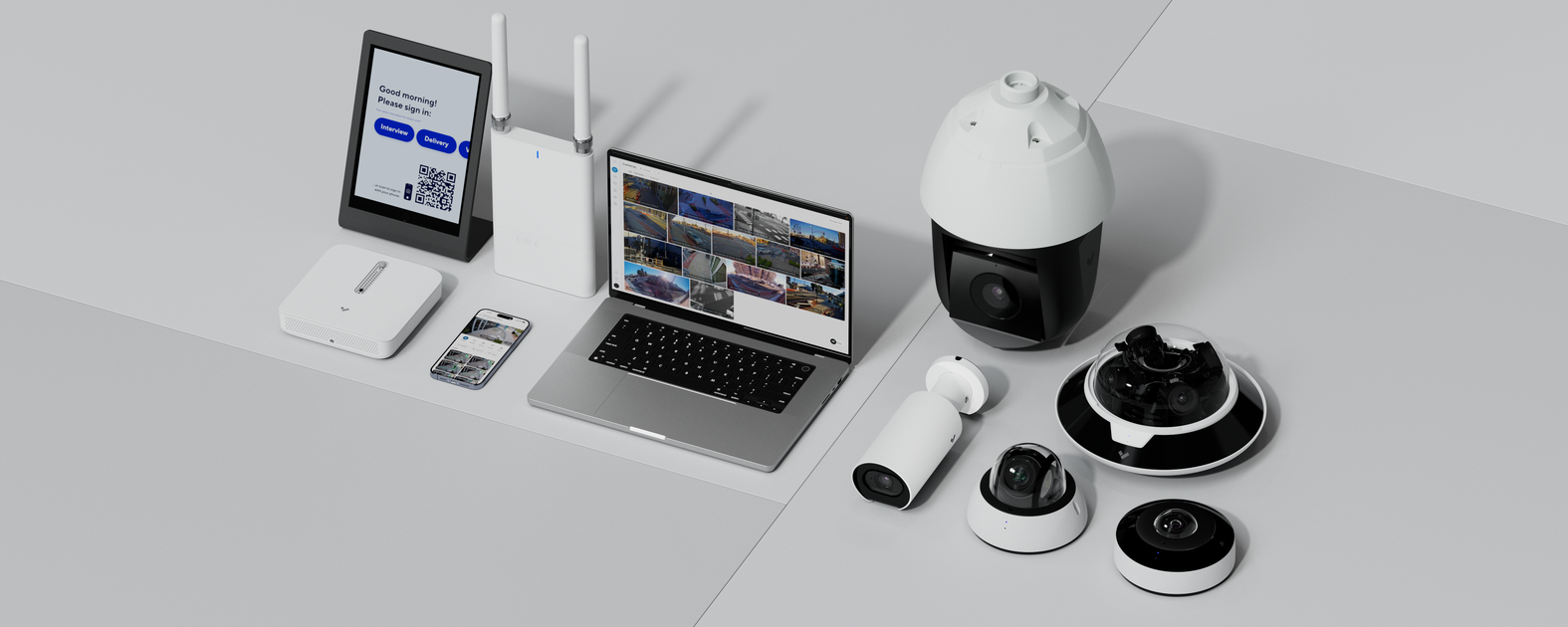
Cloud-based security has become a core part of how organizations manage multi-building environments, streamline operations, and reduce maintenance demands. As 2026 approaches, many leaders are re-evaluating their current systems and determining whether cloud-managed platforms can provide the visibility, consistency, and operational relief their teams need.
This guide outlines what cloud-based security offers, why the shift matters, and how organizations can evaluate whether they are ready to make the transition.
Centralized visibility will define modern security in 2026
Cloud-based platforms consolidate video, access control, sensors, and device health in one interface. This helps teams move faster, reduce confusion, and avoid switching between disconnected systems.
Improved visibility is one of the primary reasons organizations begin exploring cloud options. With more buildings, more devices, and fewer hours in the day, teams need a clear, unified view of what is happening across their facilities.
Reduced maintenance will free up time for higher-value work
Local servers, manual patches, and on-site troubleshooting take significant time. Cloud-managed systems reduce this burden by centralizing updates and minimizing infrastructure needs.
In 2026, organizations will continue prioritizing platforms that lower the amount of manual upkeep required. This shift allows teams to focus on monitoring, response, and oversight rather than system maintenance.
AI-assisted capabilities will support faster investigations
AI is becoming more practical and integrated. Rather than acting as a separate tool, it supports everyday tasks like event identification, motion analysis, and incident grouping.
The goal is not automation for automation’s sake. It is about helping teams locate information more quickly, identify relevant activity, and reduce time spent reviewing footage or data.
Scalability will be judged on consistency, not just capacity
As organizations grow into new buildings or expand device counts, maintaining consistency becomes more important. Cloud-based systems support expansion without requiring unique setups, server installs, or one-off configurations for each location.
In 2026, scalability will be measured by how easily teams can maintain a predictable, unified experience across sites.
Security and compliance expectations will continue rising
Cloud-based platforms now include standard protections like encryption, secure remote access, centralized logs, and consistent update cycles. These features help organizations meet internal and external compliance requirements more efficiently.
Organizations preparing for 2026 will evaluate platforms based on how easily they can support audits, reporting, and long-term data governance.
Common concerns about cloud-based security should be addressed directly
Leaders often ask about internet dependency, data handling, or redundancy. These are reasonable questions, and strong platforms provide clear, transparent explanations of how they manage each one.
Evaluating cloud security in 2026 means looking at:
- How data is encrypted
- How platforms handle outages
- How remote access is secured
- How audit logs and retention policies work
Addressing these topics early helps organizations move forward with confidence.
Clear evaluation criteria will make decision-making easier
Organizations reviewing cloud-based solutions should focus on operational impact. Strong platforms improve visibility, reduce maintenance, and streamline workflows.
Helpful evaluation questions include:
- Does this platform reduce the time required to manage systems?
- Can we access video, access activity, and system health from one location?
- How quickly can our team retrieve information remotely?
- Are AI-supported features practical and easy to use?
- What compliance reporting tools are included?
These questions help leaders determine whether a platform aligns with their goals for 2026.
A practical readiness checklist for cloud-based security
Your organization may be ready for cloud-based security if:
✔ You manage multiple facilities
✔ Your current system requires manual server upkeep
✔ Your team is stretched thin or frequently multitasking
✔ Remote visibility is a priority
✔ Investigations take longer than they should
✔ Training new staff is difficult
✔ You want a consistent user experience across locations
This checklist helps teams assess readiness without guesswork.
How organizations can start planning for 2026
A simple, practical approach includes:
-
Identify existing challenges
Focus on visibility gaps, maintenance burdens, or inconsistent workflows. -
Clarify what improvements matter most for 2026
Faster investigations, fewer manual tasks, consistent oversight, easier scaling. -
Evaluate unified platforms
Review systems that bring video, access, sensors, and device health together in one cloud-managed environment.
A clear next step for exploring cloud-based security
Parallel Technologies, along with Verkada, is hosting a live educational session for organizations considering cloud-based security.
Discover Verkada with Parallel Technologies
December 17 at 11 a.m. Central
This 45 minute session will introduce a cloud-managed security platform that unifies video, access control, sensors, and system health. Attendees will also learn how AI-assisted tools support efficient investigations and reduce manual workload.
Register to learn how cloud-based security can support your team in 2026.